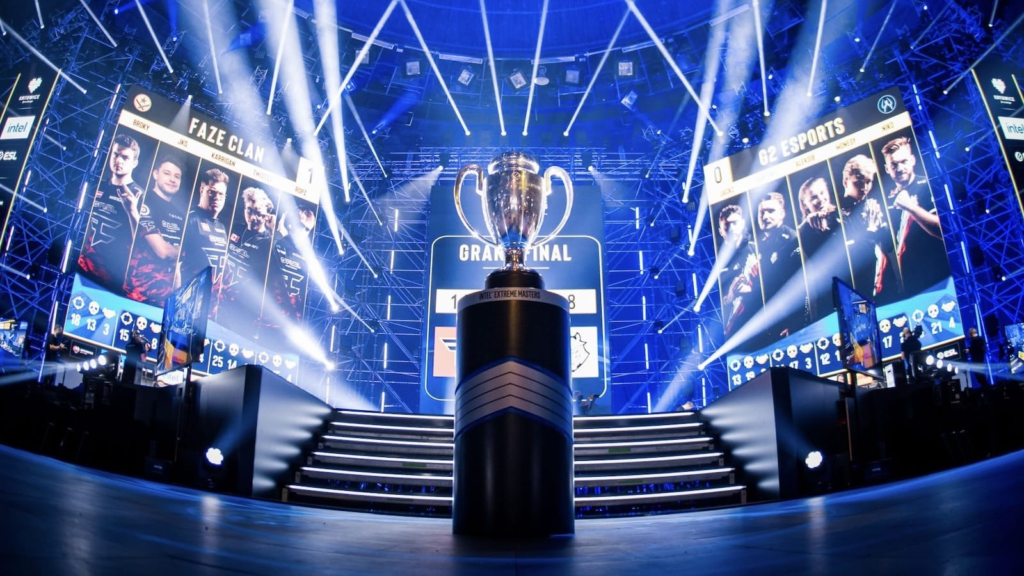
With an estimated 640 million viewers in 2025 (Newzoo), esports is a space that continues to see exponential growth – both in viewership and commercialisation – and it will continue to offer opportunities for brands as we move into 2026.
At EMW, we’re no strangers to building bridges between brands and rights holders in this space, and we want to share how this world works. This is the first in a three-part series where we’ll strip back the layers of the esports sponsorships industry.
In this first part, we’re looking at the landscape right now: how esports went from underground LAN parties to billion-dollar arenas, why big brands are scrambling to get in, and how the smart ones are winning over fans. Part two will dive into best practices, and part three will look to the future.
From bedroom to stadium
Gone are the days when competitive gaming was just a hobby. The ecosystem has exploded into a structured, global powerhouse. It’s reshaping how we think about sports marketing entirely.
The numbers speak for themselves. Global revenue is projected to smash past $4.8 billion USD by 2025 (Statista). We aren’t just talking about a niche interest anymore; esports is rivalling the size and potential of major traditional sports leagues across Europe, North America and beyond. And with more than 50% of the global esports audience in Asia, there are significant east-to-west and west-to-east brand opportunities.
Why brands are making the move
Traditional sports viewership is steady, whilst esports is a market that continues to grow. Digital platforms are desperate for new users, and global brands need access to the holy grail of demographics: young, digitally engaged and hard to reach.
That’s where sponsorship comes in. It’s the engine driving this digital shift. But throwing money at a logo placement isn’t enough anymore.
Leaving money on the table?
Despite the cash pouring in, there’s a gap in how sponsorships are working. Investment is high, but often the pressure to promote the partnership falls entirely on the rights holder rather than the brand itself.
Teams like the NBA 2K League’s Raptors Uprising GC do a brilliant job using their own channels – X, Instagram, Twitch, YouTube – to hype up their partners. But when sponsors sit back and let the team do all the heavy lifting, they miss an opportunity to maximise exposure to their brand.
There is so much untapped value here. Brands that are willing to co-create killer content and build proper digital strategies with their partners are the ones who will see the real ROI. It’s a chance to stand out in a crowded market and connect with the audience.
The “usual suspects” vs. the new wave
In the early days, esports sponsorship was simple. It was all about the “native” brands – companies that naturally fit the gaming lifestyle. Think hardware manufacturers and headset makers.
Energy drinks own this space. Monster Energy and Red Bull have set the benchmark, proving that if you support the culture, the culture supports you. They established the blueprint for what a good brand fit looks like.
But the game has changed.
Now, we’re seeing a massive influx of lifestyle and mainstream brands – companies that have nothing to do with gaming hardware but everything to do with gamers’ lives. Today, nearly half of all sponsorships come from these non-gaming sectors.
Heavy hitters like HP, Gillette and Mercedes-Benz aren’t just dipping a toe in – they’re using esports as a key marketing channel to build loyalty with a generation that doesn’t watch traditional TV commercials. It proves that esports isn’t just a tech thing. It’s a culture thing.
Passing the “vibe check”
In this industry, authenticity is everything. If the fit between the sponsor and the team feels forced, fans will spot it a mile off.
Research shows that “fit” is the magic ingredient. When fans see a partnership that makes sense, they don’t just tolerate it – they appreciate it.
Take a tech giant like Intel supporting a team. Fans see the investment as supporting their community, which translates into brand loyalty. This audience is smart; they use ad-blockers and they hate being sold to. But they love being supported. When a brand adds value – whether through great tech or cool content – marketing stops feeling like an ad and starts feeling like support.
At EMW, our aim is to unite brands with teams in the same way – to add value beyond a logo placement. We’re proud to announce that EMW recently brokered a major partnership between G2 Esports and BetPanda. It’s a classic example of bringing two ambitious brands together, creating exciting new opportunities between the world of esports and blockchain.
When worlds collide
Esports fans are a different breed. They aren’t just watching; they’re analysing, learning and engaging. They are a heavily engaged audience. They want to know the strategy, the mechanics, and the meta.
That’s why we’re seeing such an interesting crossover between traditional sports and esports. It’s not a rivalry; it’s a partnership.
Traditional sports giants are waking up to this.
NBA teams like the Golden State Warriors are diving in with their own NBA 2K teams, leveraging partners across both their basketball and esports properties.
Football giants like Manchester City are expanding their digital footprint, partnering with organisations like FaZe Clan and signing pro players to represent them in FIFA/EA FC.
Traditional teams need to be where the young fans are to stop their audience fragmenting. By going “all-in” on gaming, these clubs prove they are relevant to the next generation.
What’s Next?
The landscape is settled, the money is there, and the audience is waiting. The question now isn’t if you should sponsor, but how.
In the second part of this series, we’ll dive into the tactical stuff: the best practices for esports sponsorship and how to activate without getting roasted in the chat.